 family curtain#2, 2017 Stoff, Vorhangschiene, Leuchtstoffröhren, 250 x 155 x 165 cm
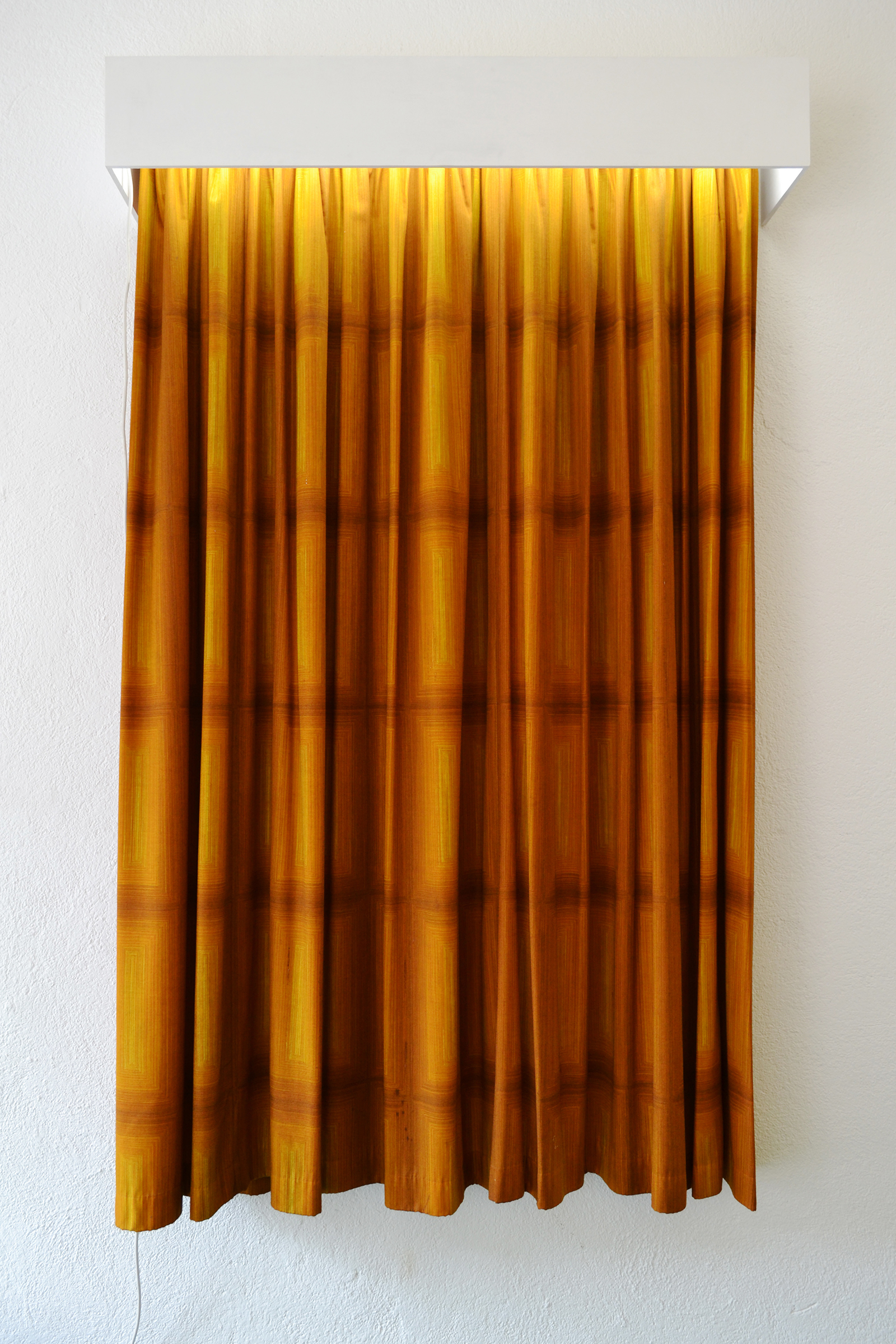 family curtain#1, 2013, Stoff, Vorhangschiene, Leuchtstsoffröhre, 250 x 120 x 25 cm
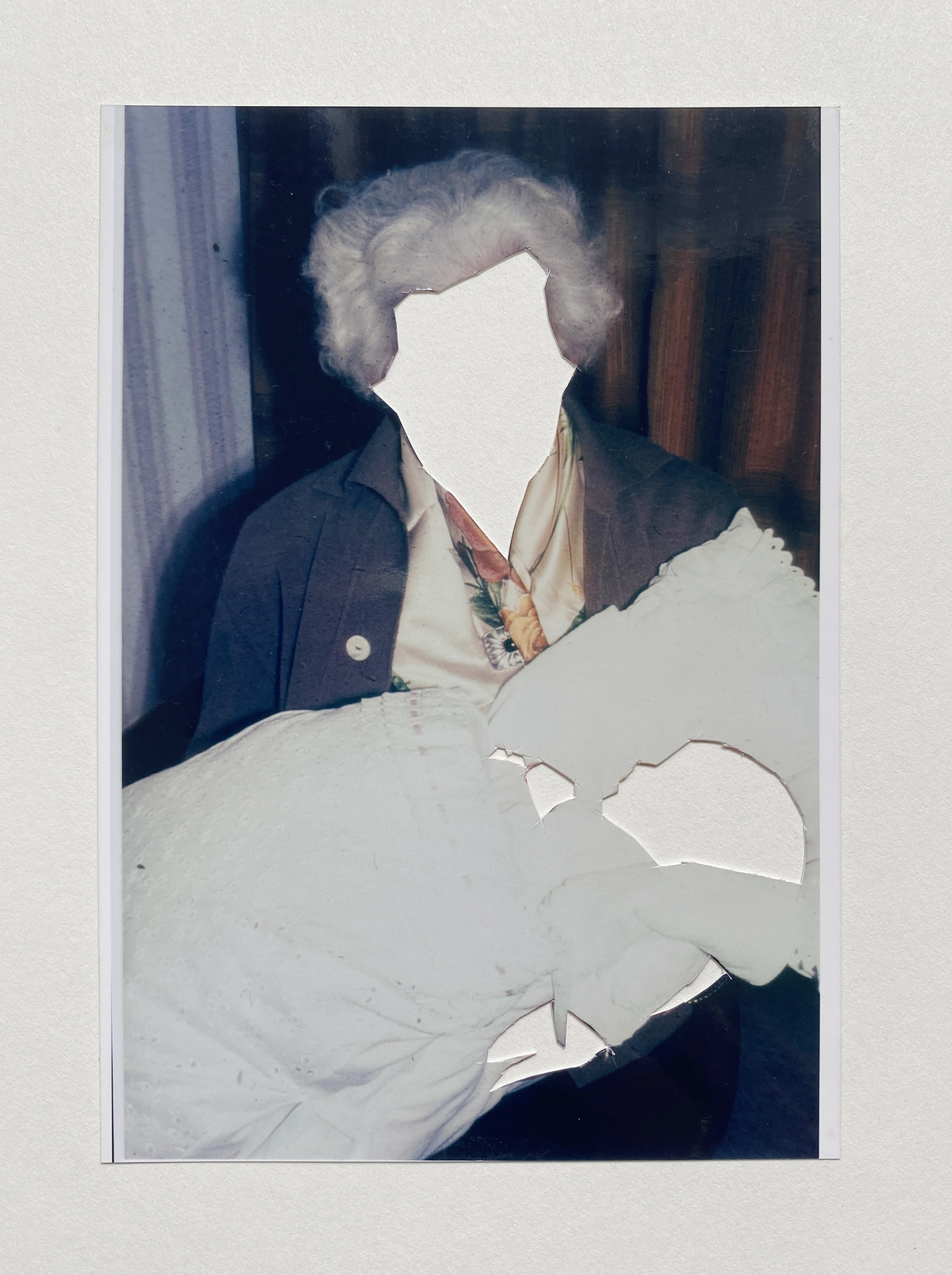 family of family curtain 01, 2013, fragmentierte Fotografie, 13 x 9 cm
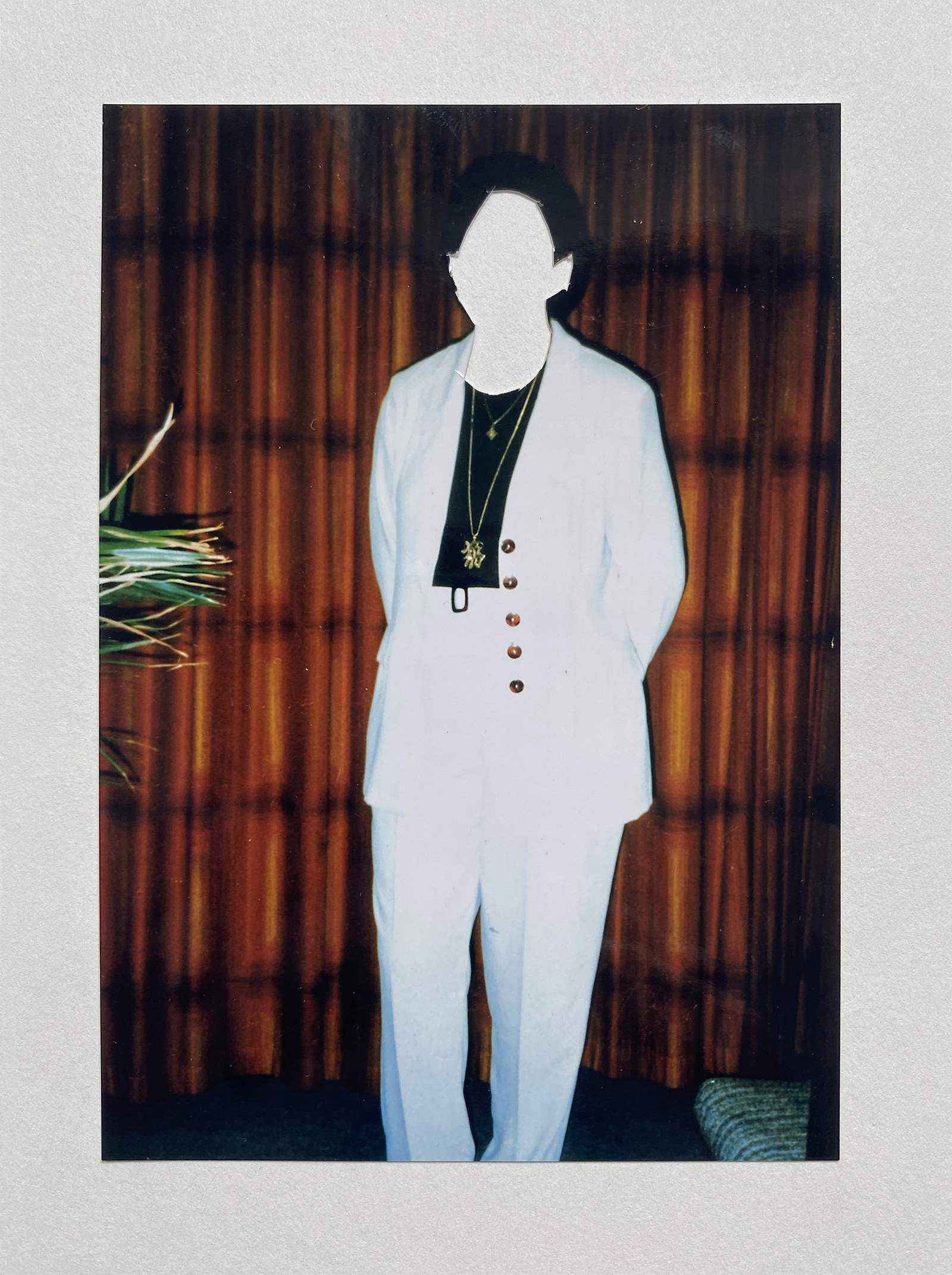 family of family curtain 02, 2013, fragmentierte Fotografie, 13 x 9 cm
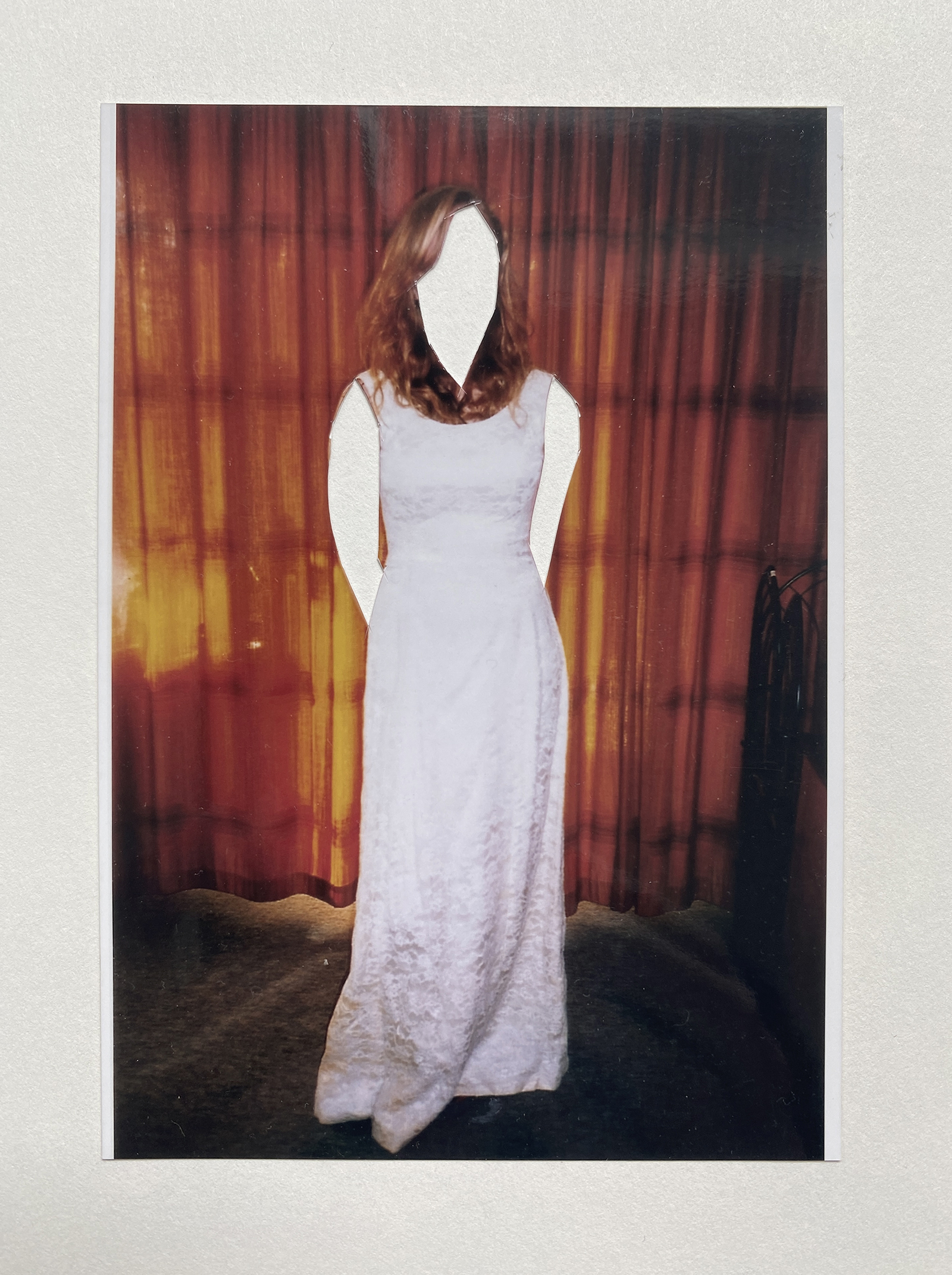 family of family curtain 03, 2013, fragmentierte Fotografie, 13 x 9 cm
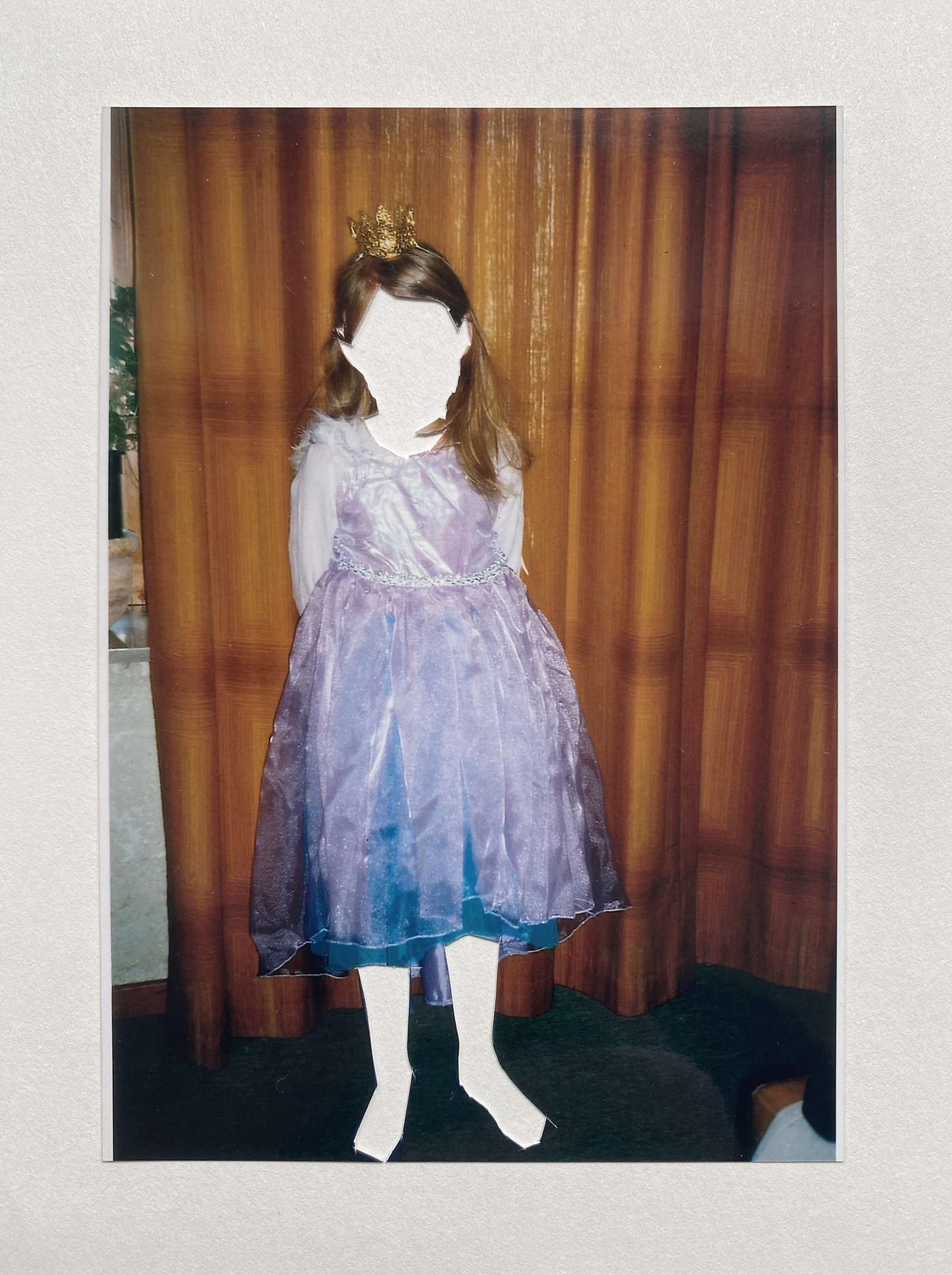 family of family curtain 04, 2013, fragmentierte Fotografie, 13 x 9 cm
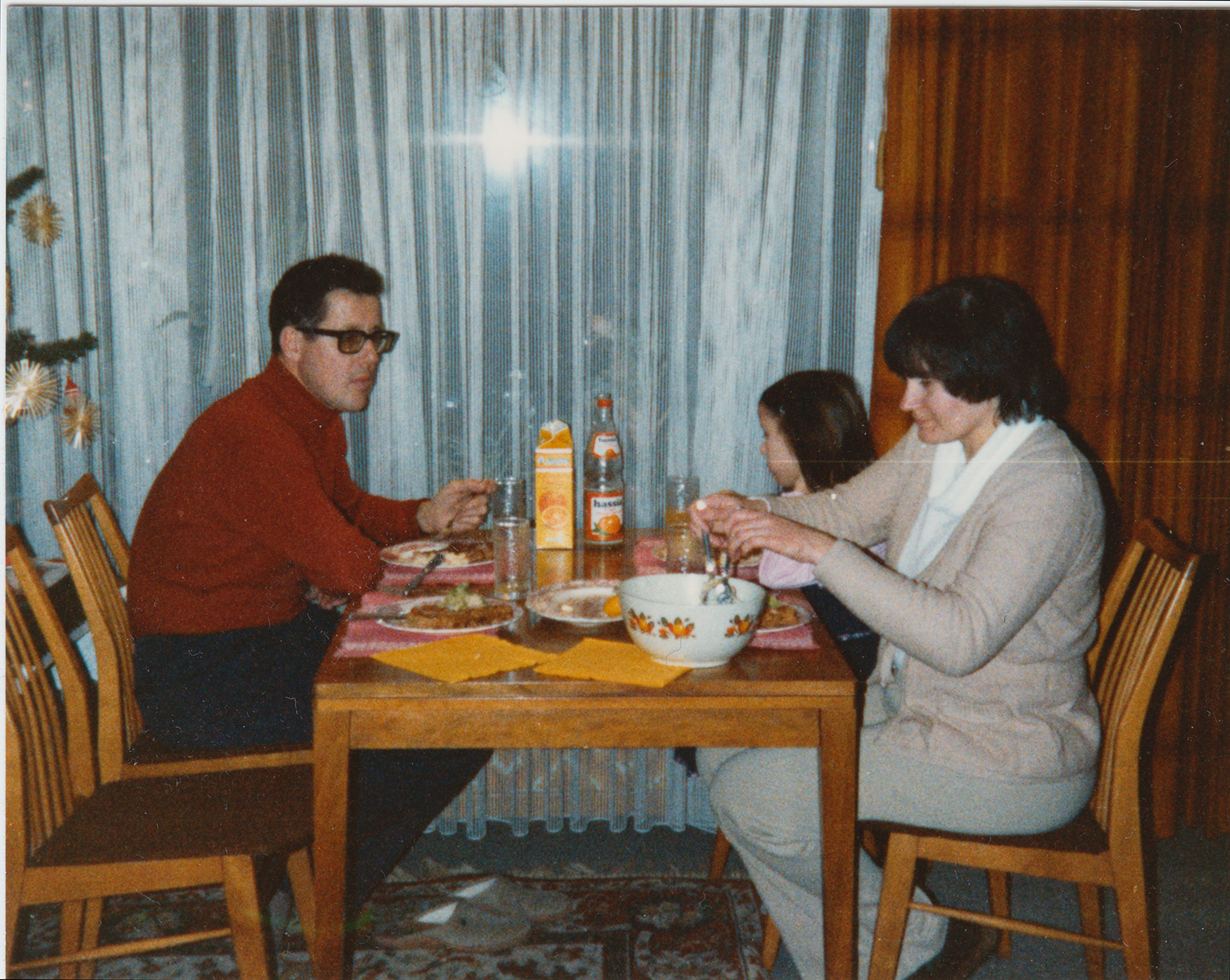 family of family curtain, Dokumentation
DE Der Wohnzimmervorhang aus meinem Elternhaus ist bis jetzt – da ich das hier aufschreibe – eine Konstante. Er hängt dort seit ich denken kann und hing dort schon vor meiner Geburt 1973.
Mein Vater hat das Haus in Selbstbauweise und Nachbarschaftshilfe von 1964-1966 gebaut. Er sagt, er habe jeden einzelnen Stein in der Hand gehabt. Meine Eltern sind 1966 in das Haus eingezogen. Eine Fotografie, auf dem der Vorhang zu sehen ist lässt sich leicht datieren: Sie zeigt meine Urgroßmutter mit meiner Schwester als Säugling auf dem Arm, der Vorhang im Hintergrund. Meine Schwester ist 1967 geboren.
Seither dient der Vorhang meiner Familie als Fotohintergrund zu besonderen Anlässen, aber auch zufällig kommt er mit aufs Bild. 2006 habe ich ihn als Hintergrund für eine Videoarbeit über meine Mutter gewählt. 2013, zwei Jahre nach dem Tod meiner Mutter, habe ich ihn erstmals in den Ausstellungskontext übertragen. Danach habe ich immer wieder Möbel und auch andere Vorhänge aus meinem Elternhaus gezeigt. Während des Ausstellungszeitraums kommt mein Vater dann ohne Vorhang, Tisch oder Nachttisch aus. Es ist eine Art der Kommunikation zwischen uns.
Indem ich Möbel und Textilien aus familiärem Kontext aus der Zeit des Wirtschaftswunders in den Ausstellungskontext überführe, übertrage ich auch eine ganz bestimmte Atmosphäre in den Ausstellungsraum. Eine jüngere Generation assoziiert diese Atmosphäre mit der Wohnung der Großeltern, meine Generation mit der der Eltern. Bei diesen Eltern oder Großeltern handelt es sich um eine Generation, die den zweiten Weltkrieg oder die Nachkriegszeit als Kinder erlebt hat und die üblicherweise nicht über die erlebten Traumata spricht.
Durch die statisch platzierten Möbel und Textilien schaffe ich eine Möglichkeit der familiären Erinnerungen und verweise gleichzeitig auf das Schweigen in der deutschen Nachkriegszeit.
EN The living room curtain from my parents’ house has remained a constant ever since – as I write this. It has been hanging there for as long as I can remember, and was already there before I was born in 1973.
My father built the house himself with the help of neighbours between 1964 and 1966. He says he handled every single brick. My parents moved into the house in 1966. A photograph showing the curtain is easy to date: it shows my great-grandmother with my sister as a baby in her arms, the curtain in the background. My sister was born in 1967.
Since then, the curtain has served as a photographic backdrop for my family on special occasions, but it also happens to appear in the picture by chance. In 2006, I chose it as the backdrop for a video work about my mother. In 2013, two years after my mother’s death, I incorporated it into an exhibition context for the first time. Since then, I have repeatedly exhibited furniture and other curtains from my parents’ home. During the exhibition period, my father manages without the curtain, table or bedside table. It is a form of communication between us.
By bringing furniture and textiles from a family context dating back to the economic miracle into the exhibition space, I also convey a very specific atmosphere within the gallery. A younger generation associates this atmosphere with their grandparents’ home, whilst my generation associates it with that of their parents. These parents or grandparents belong to a generation that experienced the Second World War or the post-war period as children and who do not usually speak of the traumas they endured.
Through the static placement of the furniture and textiles, I create an opportunity for family memories whilst simultaneously drawing attention to the silence of the German post-war period.